Culture: how it works. Follow one scene through the benchmark.
Context & discovery
Cultural Atlas Indian tourism references
Culture & heritage
Wikipedia · UNESCO Sahapedia · IGNCA
Visual & regional evidence
Wikidata · Wikimedia Commons · ASI Census of India · Ministry of Tribal Affairs
ACTUAL DATASET EXAMPLE · IG_G_001139
Magh Bihu dawn near Nagaon, Assam: a bamboo-and-hay meji bonfire, a bhelaghar hut beside it, and women offering til pitha and coconut laru.
01 · Input evidence
Start with the named sources above. Link each cultural claim to its specific supporting reference.
02 · Structured prompt
Claude Code helps turn the scene into a prompt and required visual checks.
03 · Machine verification
Validation gates + Gemma 4 31B check the claims against their evidence.
04 · Human approval
Experts review cultural accuracy and translations before test-set release.
05 · Model evaluation
Generate images from approved prompts and check each required detail. Planned.
Human check, in this example
Are the fire, hut and offerings correctly identified as Magh Bihu? Does the translation preserve those details? Machine verification alone does not release the scene.
CULTURE · SLIDE 2 OF 3
Culture: what we have. The data behind the example.
237
authored scenes
500
target scenes
10
categories
34
states / UTs
143 verified*55 need experts39 not yet verified
*Machine-verified. All 237 current scene records remain drafts.
Pending: expert checks, 1,356 translation rows and 263 more scenes to reach 500. Five-language design: EN / HI / TA / TE / BN.
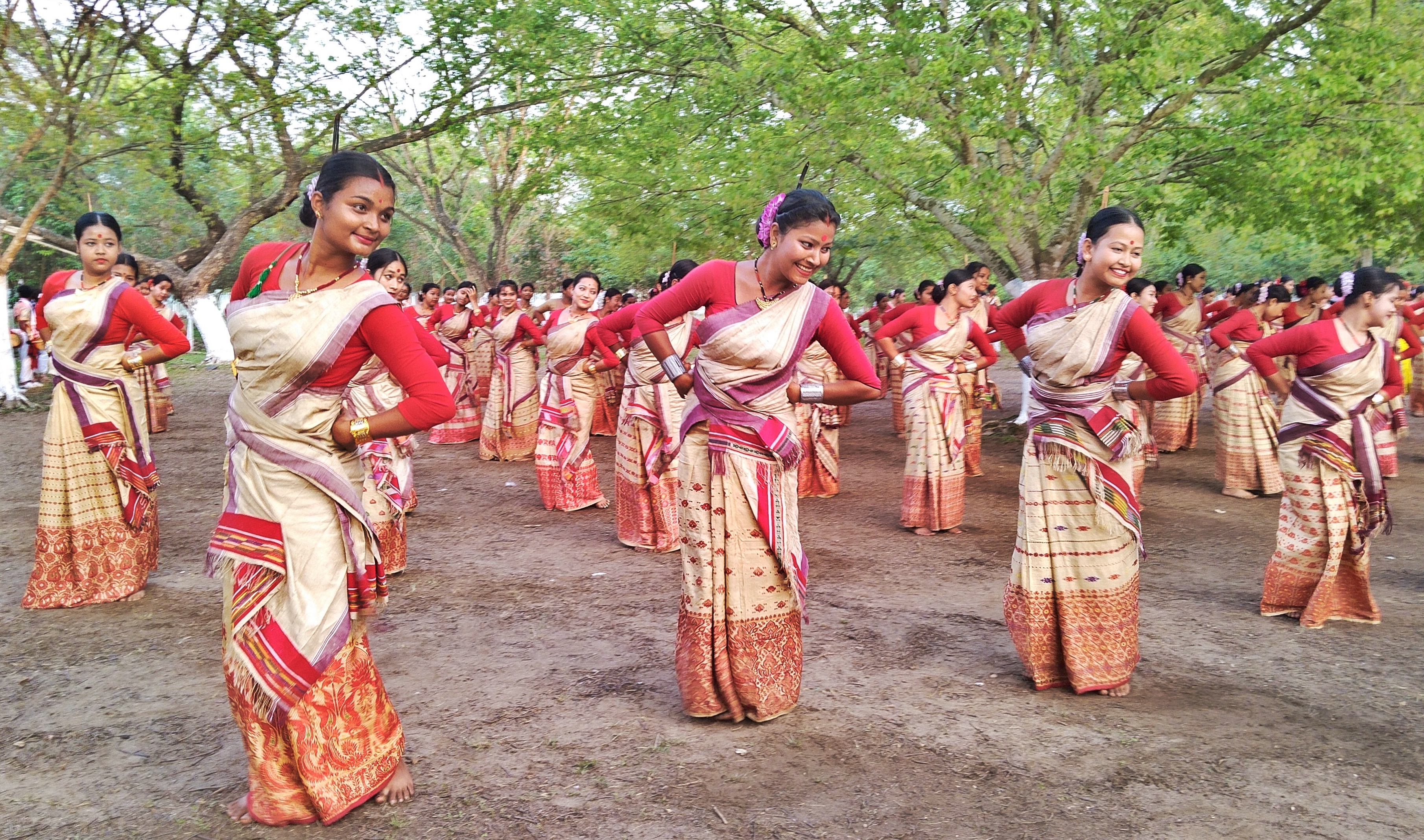
Supporting detailHarvested field · regional clothing
Current stateMachine-verified → human review
Regional clothing reference; this photo does not depict the Magh Bihu ritual or a scored output.
CULTURE · SLIDE 3 OF 3
Culture: two kinds of expectation. Explicit details. Implicit meaning.
ILLUSTRATIVE MAGH BIHU PROMPT
“Magh Bihu in Assam: villagers gather at dawn around a bamboo-and-hay meji bonfire.”
01 · EXPLICIT EXPECTATIONS
Did it show what we asked?
Details written directly in the prompt.
Example checks: villagers, dawn and the bamboo-and-hay meji bonfire.
VLM-assisted checks
A vision-language model inspects the image against a checklist. People verify mistakes and uncertain judgments.
02 · IMPLICIT EXPECTATIONS
Does the culture make sense?
Expectations inferred from the cultural context, even when unstated.
Example checks: does the ritual fit Magh Bihu? Are clothing and offerings appropriate to this Assamese scene?
Culturally knowledgeable people
Review meaning, regional context and stereotypes against evidence. Record valid local variations.
Paper’s human rubric
0 no alignment · 0.5 partial · 1 complete One alignment rating; below 1, flag explicit / implicit / both and explain why.
Our proposed workflow: VLM assistance + human review of both. CulturalFrames used humans for both; its automated metrics showed weak agreement with people. This is evaluation design, not a completed scoring run.
CINEMA · SLIDE 1 OF 3
Cinema: the architecture. Physical features → Gemma → people.
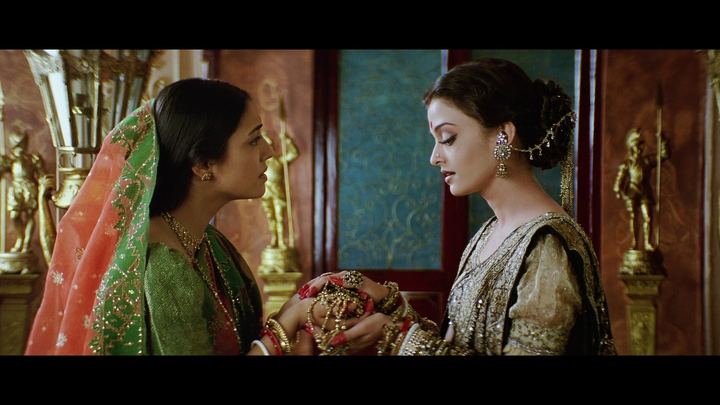
Devdas · real reference frame from the pilot
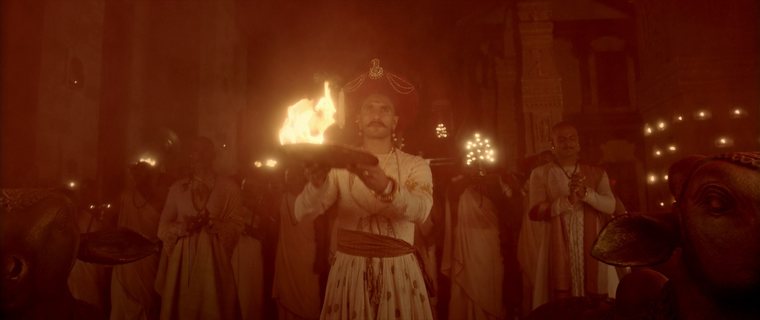
INPUT · REAL FILM FRAMES + MATCHED CROPS
Start with the craft inside the image
Example: compare a real frame with a copy whose grain has been removed. First measure the physical change; then use controlled image pairs to train and test the judge.
01 · PHYSICAL MEASUREMENT
Measure image features
Lane A measures 11 descriptors: grain, colour, lighting, depth of field and other craft cues.
Controlled changes check that each measurement reacts as intended.
02 · GEMMA FINE-TUNING
Train the AI judge
LoRA fine-tuning trials adapt Gemma 4 31B using real-versus-altered frame pairs and additional negative examples.
Gemma is the evaluator. The image-generating LoRA is a separate model.
03 · HUMAN EVALUATION
Validate the judgments
People compare images blindly, with model names hidden, and rate film look and content.
Check agreement with Gemma and test for bias before ranking generators.
In one line
Measure the physical craft → teach Gemma what to look for → check it against people.
Completed: physical-feature pilot and Gemma fine-tuning trials. A reliable, human-validated generator ranking remains pending.
CINEMA · SLIDE 2 OF 3
Cinema: what we have. A pilot sample and a larger training library.
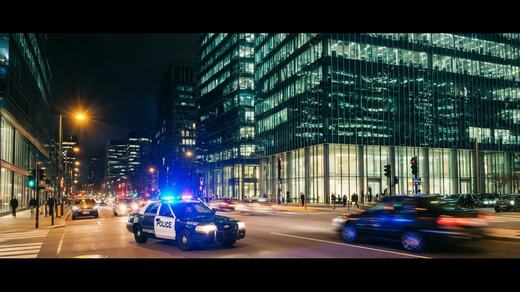
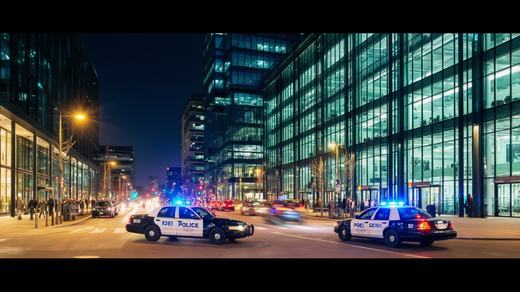
Cinema: what gets judged? One brief. Three images. Specific checks.
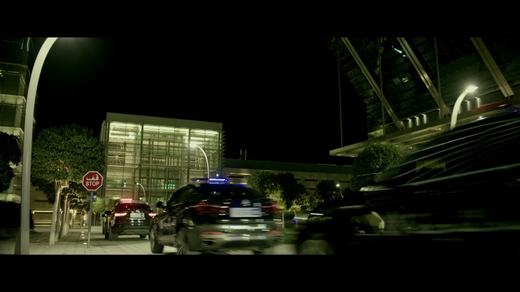
Shared brief: A wide night shot of a modern city street featuring a glass building, a police car with blue lights, and a blurred vehicle speeding past.
Real film reference DishoomBase model output Qwen-Image-2512 · seed 42Eros LoRA output Checkpoint 4250 · strength 0.5 · seed 42
Scene accuracy
Check the glass building, police car, blue lights and passing vehicle.
Cinematic craft
Compare night lighting, colour contrast, motion blur and wide-shot framing.
Human judgment
Rate blinded pairs. A selected example does not establish a winner.
Planned first wave: Qwen-Image-2512 base · current Eros LoRA · next Eros LoRA · i1-3B · FLUX.1 [Dev] · HiDream-I1-Full · Z-Image · Qwen-Image.
TEXT · SLIDE 1 OF 1
Text benchmark. Planned for a later phase.
We are currently testing different OCR models, including Surya and Sarvam. We will complete the Text benchmark later, after comparing the readers and settling the evaluation approach.
MODELS UNDER COMPARISON
Surya OCR · Sarvam · other OCR readers
Additional candidates include PaddleOCR / PaddleOCR-VL and Tesseract.
NOW
Test the readers
Run the same images through different models and compare how accurately they read Indian-language text.
NEXT
Review the results
Check errors, difficult scripts and unclear labels with human review. Choose a consistent evaluation setup.
LATER
Complete the benchmark
Finalise the Text benchmark and publish comparable results once the model evaluation is ready.
Current status
Model comparison is in progress. The complete Text benchmark is deferred; no final model ranking is being presented.